
By Martins Abochol
The Chief Judge of Taraba State, Justice Joel Agya has stated that the fight against crime and corruption can not be effectively sustained without a witness protection and sentencing mechanism.
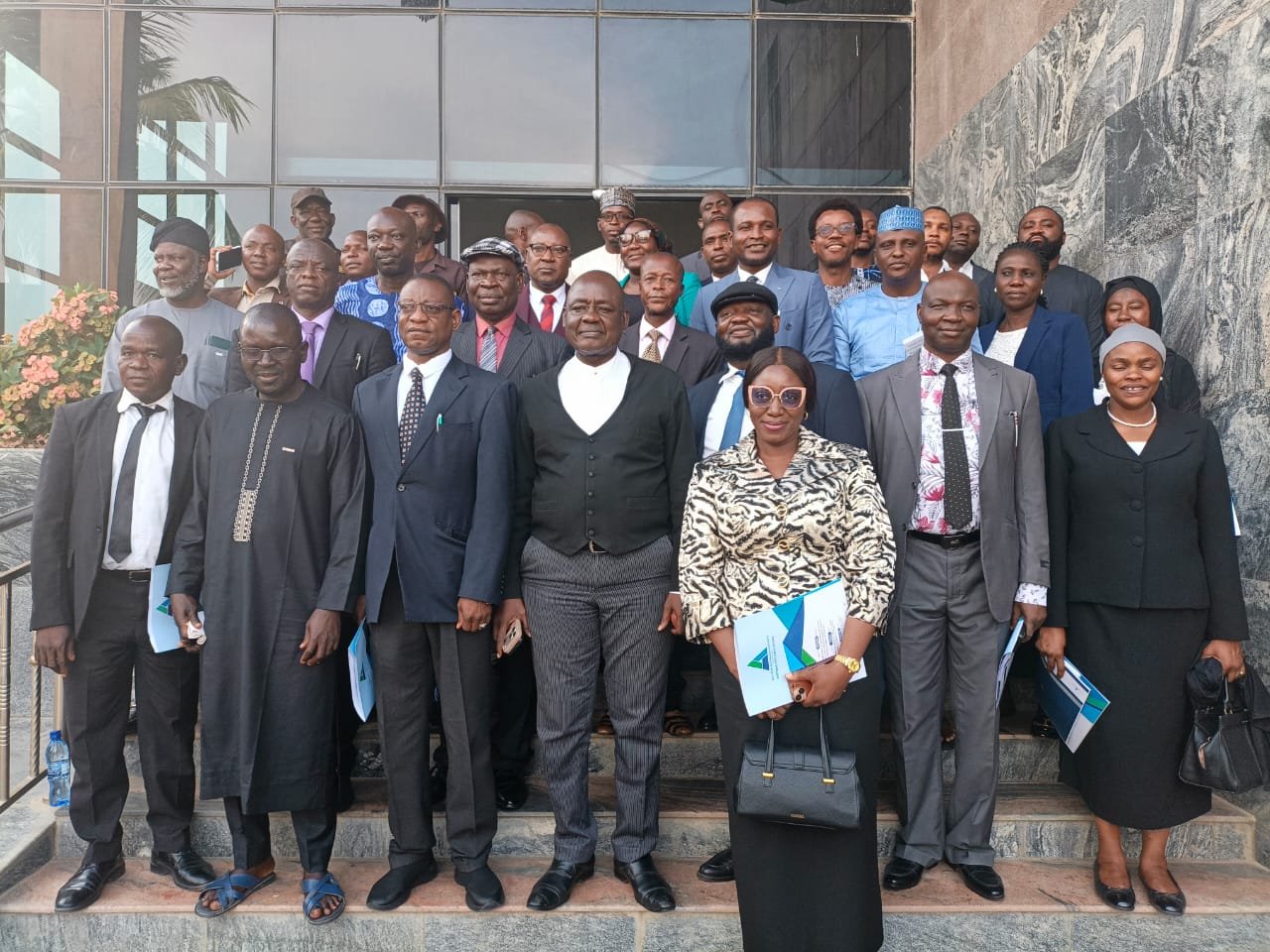
Agya made the declaration on Thursday, at the One-Day Stakeholders Workshop on Witness Protection and Taraba State Courts (Sentencing Guidelines) Practice Directions 2026.
The workshop was organised by the Rule of Law Empowerment Initiative also known as Partners West Africa Nigeria (PWAN), supported by the MacArthur Foundation, and held in collaboration with the Taraba State Judiciary in Jalingo.
Agya emphasised that witnesses were the lifeblood of criminal trials, noting that a criminal justice system that failed to protect its witnesses rather encouraged silence, fear, and impunity.
“The issue of witness protection in our criminal justice system is key, without which the fight against crime and corruption cannot be effectively sustained. witnesses remain the lifeblood of criminal trials.
“Where witnesses are exposed to intimidation, reprisals, or undue hardship, justice itself is imperiled. A criminal justice system that fails to protect its witnesses inadvertently encourages silence, fear, and impunity.
“It is therefore imperative that we institutionalise practical and context-appropriate witness protection mechanisms within our justice processes,” Agya said.
The chief judge recalled that plea bargaining and the Taraba State Courts (Sentencing Guidelines) Practice Directions, which were central to the workshop, were developed by the Rule of Law Empowerment Initiative with support from the MacArthur Foundation during stakeholder engagements held on Nov. 14th–15th 2025.
Agya described the exercise as a significant milestone, reflecting a collective recognition that a modern criminal justice system must be efficient, transparent, predictable, and fair, both to the State and to citizens.
He further noted that plea bargaining, when properly regulated and transparently applied, was not a shortcut to injustice.
He said that the plea bargain was rather a pragmatic tool that would reduce case backlogs, conserve judicial time, promote restitution to victims, and enhance public confidence in the justice system.
Agya also emphasised that sentencing guidelines served as a vital compass for judicial discretion, ensuring consistency, proportionality, and fairness while still preserving the independence of the courts.
However, he cautioned that the success of these reforms does not lie in the documents alone.
“Laws, rules, and guidelines are only as effective as the capacity, understanding, and commitment of those entrusted with their implementation. This is why continuous capacity building and sustained stakeholder engagement are indispensable,” he said.
He commended the Rule of Law Empowerment Initiative (PWAN), supported by the MacArthur Foundation, for collaborating with the Taraba Ministry of Justice and the Taraba State Judiciary to convene the workshop.
He described it as a forum for robust dialogue, shared learning, and practical reflection on operationalizing the guidelines within the state’s institutional and socio-legal environment.
In her remarks, Mrs. Rebecca Balami, Programme Officer of PWAN, on behalf of the Executive Director, Ms. Kemi Okenyodo, commended the Chief Judge and the Honourable Attorney General and Commissioner for Justice of Taraba for their unwavering commitment to implementing a modern justice system.
Balami noted that Taraba was at the forefront in the implementation of the Administration of Criminal Justice Law (ACJL) in the state.
She also acknowledged the MacArthur Foundation for its support in making the initiative successful.
Judicial officers, prosecutors, investigators, correctional officials, legal practitioners, and civil society actors participated in the workshop.


 By
By



 By
By